

At Sonimus, we love learning more about our clients and collaborators and sharing their stories with the community. As we previously did with engineers like Ezquiel Morphy, Leandro Sabino or producer Adrian Schinoff, today we get to know more about music producer Tom Weber.
Tom Weber, also known as John Webster and Reverend John, is an Austrian music producer, remixer, audio engineer, drummer, and songwriter with a long-standing career in the music business. He has worked on European and International projects with artists such as Big Mountain and Enrique Iglesias. He also has a deep understanding of audio technology, having worked with top industry brands such as Avid and TC Electronic.
In today’s article, we spoke with Tom about his music career, technology, and musicianship. He also broke down his mixing workflow and shared how he integrates Sonimus plugins into his projects.
Tom’s Beginnings
Tom Weber started as a drummer playing in various local bands in Austria back in the early 80s. However, he was always more interested in the bigger picture rather than just his own instrument. He studied and analyzed the production of his favorite records by listening to his vinyl and cassette collection. But it was at the end of the 80s when, together with his long-time musical partner, Werner Freistaedter, they bought their first studio setup and began their music career.
Tom recalls, “Things moved fast from there”. While they couldn’t do full high-end mixing with their early setup, they bought their first ADAT machines and went into larger studios for final mixdowns. Thanks to one of his first projects, Unique 2, Tom achieved massive international success, including a number one European chart-topper with the song Break My Stride.
Musical and Technical Journey
After producing several projects in Austria, Tom got the opportunity to move to Los Angeles, where he met and collaborated with professionals like Bruce Caplin (ZZ Top, Tracy Chapman, or Big Mountain) or Peter Wolf (Frank Zappa, Scorpions, or Starship). During his time there, Tom learned how console preamps can add weight to any recording even before touching an EQ, and the importance of capturing sounds right from the source.

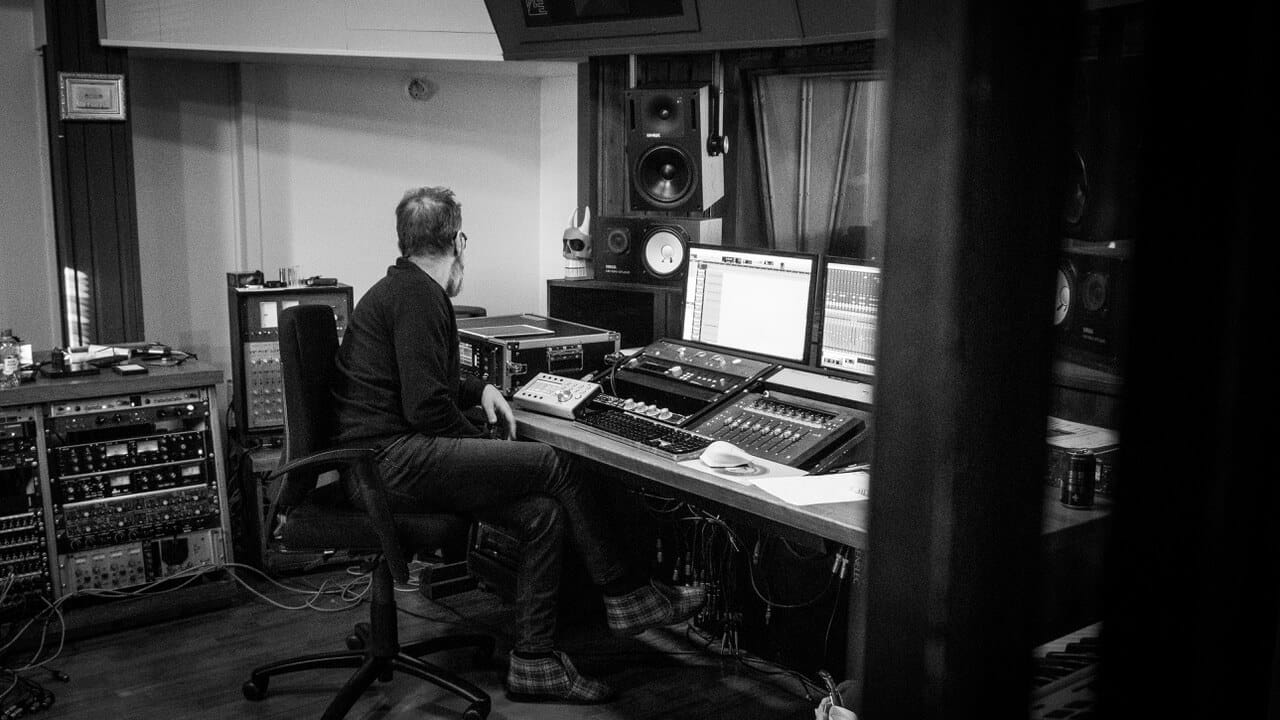
When he returned to Austria, Tom reunited with Werner, who had acquired a classic SSL 4k from London’s Townhouse Studios (the exact desk Phil Collins used in 1980 to record In the Air Tonight). Working on that desk, with analogue equipment, and hand in hand with Werner, Tom understood why analogue hardware sounds the way it does and can add depth and cohesion to a record.

Around that same time, Tom joined Digidesign/AVID as a Product Manager, and later TC Electronic, which gave him the privilege of meeting top producers, bands and world-class musicians such as Nathan East or John Petrucci. During these meetings, he always asked the same question: “What does it take to become as good as you are?” Their answer was universally the same: “Practice, practice, practice—play, play, play!”. And while Tom realized that he didn’t have the patience to reach their level of dedication on drums, his path had led him to something much more exciting: producing.

“As a producer with trained ears and a sense for arrangement, you can collaborate with world-class musicians to create songs that touch millions. And when an exceptional musician plays the part, the source tone is usually instant—saving you hours of tweaking in the mix.“
S-Concole and N-Console: The Sonic Foundation
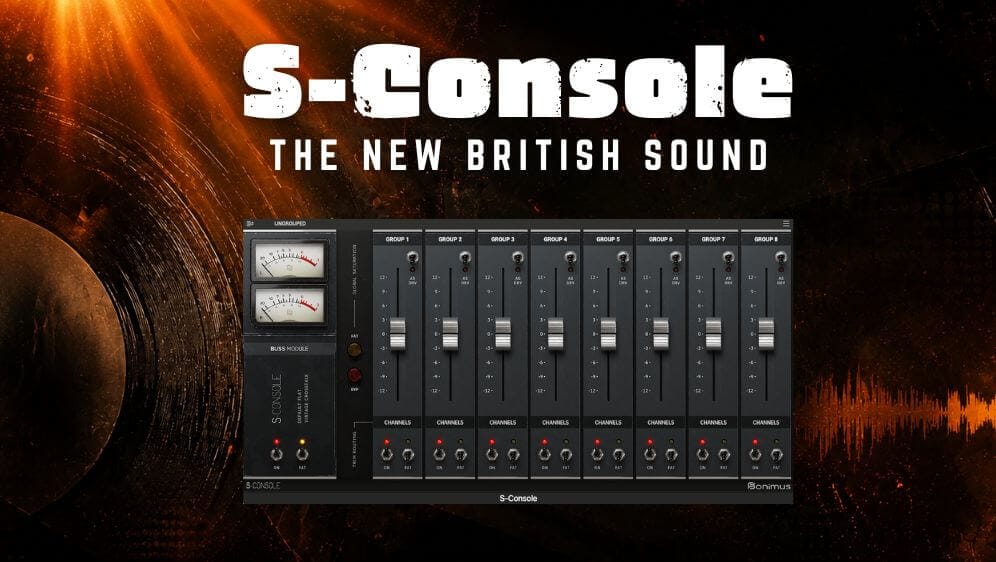
Ever since Tom moved to In-The-Box mixing, he’s been looking for the absolute best emulation of an analogue console to capture its vibe inside the DAW. He found out about S-Console through Social Media and decided that he needed to test it against the original multitrack session of my 90s remix work for Big Mountain’s hit single “Baby I Love Your Way”, recorded on Sony digital tape machines and mixed by the legendary Chris Lord-Alge (CLA) on his iconic SSL 4000. Tom achieved a 90% match to the original mix, leaving the remaining 10% to analogue variations and specific moves CLA made back then. This test proved to him that Sonimus plugins could bring the real weight, vibe, and depth of legendary analogue consoles straight back into the DAW.

“What excites me even more today is the ability to recreate almost identical analogue results directly inside a DAW. You don’t need a multi- million-dollar budget anymore to deliver a world-class sounding mix.”
Listen to Baby I Love Your Way (2026)
Tom also uses N-Console and chooses between the two console emulations depending on the source material and whether the track demands surgical punch or musical warmth. S-Console is his choice when he needs aggressive “in-your-face” presence, fast transient punch, and surgical precision (punchy drums, modern Pop beats, Rock, or heavy Club tracks). On the other hand, N-Console is his go-to for musical density, warmth, and signature low-mid “flesh,” and silky top-end (ballads, vocals, acoustic guitars, R&B, and Nu-Disco).

Sonimus at Work
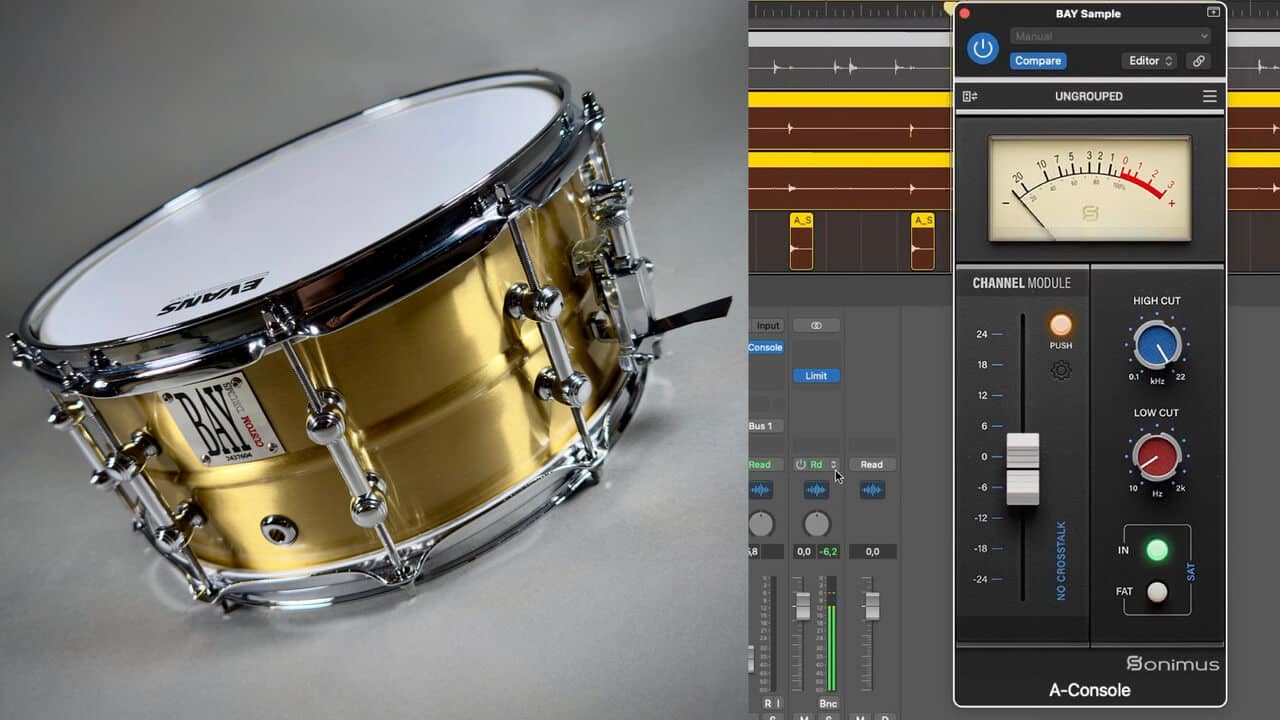
When working in the analogue domain, the signal coming off the tape machine hit the console preamp first. Mimicking this process, Tom places the console emulation (N-Console or S-Console) as the very first insert on every channel. Doing this ITB establishes proper gain staging and sets the baseline analogue tone right away.
As we explained in a previous article, Tom uses N-Console and S-Console together in his sessions as his Secret Hybrid Trick. “When producing a Nu-Disco remix, I want the fat Neve warmth reminiscent of ABBA (Gimme! Gimme! Gimme!), combined with the transient punch of an SSL. I set N-Console as the overall session foundation while driving drum channels or buses through SSL-style preamps and compressors.”.
Building a career in Music
As we usually do in these interviews, we asked Tom what it takes to work in the modern music industry. His answer focused on two main ideas: musical soul and trained ears.

“You need a genuine feel for music, ideally gained by playing in bands and understanding how musicians think and feel.”
While studying and staying on top of technical trends help, real-world experience can’t be replaced and provides a human perspective the music industry needs. Understanding how musicians think and feel, and being able to see the bigger picture and know what their music needs, is what can turn a production from average into a real hit.
If you are interested in exploring Tom Weber’s work across the decades and listening to everything from his 90s chart hits to his latest hybrid mixes, you can visit his website: www.johnwebster.at.





Leave A Comment
You must be logged in to post a comment.